Appam with Coconut Milk
Soft, lacy-edged rice pancakes with a fluffy white centre, fermented overnight and served with sweet, cardamom-scented coconut milk.
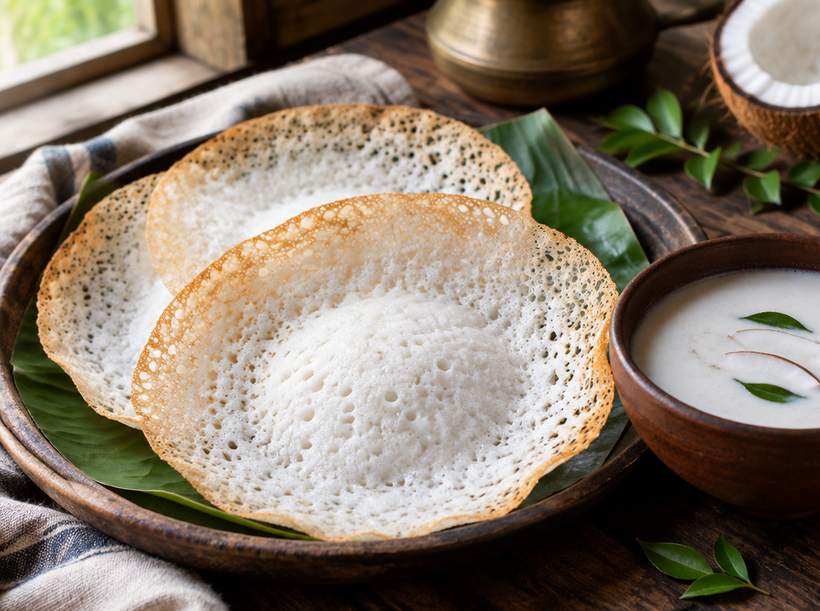
Appam is a bowl-shaped rice pancake from Kerala and Tamil Nadu, with a soft, spongy centre and a crisp, lacy edge. The batter is made from soaked rice and a little cooked rice, ground with coconut and fermented overnight with a pinch of yeast. It is cooked in a small round pan called an appachatti, which is swirled so the batter climbs the sides and thins out. Appams are eaten with sweet coconut milk or with a vegetable stew, and they make a gentle, festive breakfast. The rest is simple: patience and a hot pan.
Method
- Wash and soak the raw rice for 4 hours. Drain.
- Grind the soaked rice, cooked rice and coconut with the water to a very smooth, slightly thick batter.
- Dissolve the yeast and sugar in 2 tbsp warm water and add it to the batter with the salt. Mix well.
- Cover and ferment in a warm place for 8 to 10 hours or overnight, until the batter has doubled and is bubbly.
- For the coconut milk, warm the coconut milk gently with sugar and crushed cardamom on low heat for 3 to 4 minutes. Do not boil. Keep warm.
- Heat an appam pan or small kadhai and grease lightly. Pour a ladle of batter in the centre and immediately swirl the pan so the batter coats the sides.
- Cover and cook on medium heat for 2 to 3 minutes, until the edges turn crisp and golden and the centre is set and fluffy. Remove carefully and repeat.
Chef's tips
- The batter should be thin enough to swirl but not watery; adjust with water.
- Do not flip an appam; it cooks covered on one side.
- Keep the batter in a warm place; in cold weather, ferment in the oven with the light on.
- Do not boil the coconut milk, or it may split.
Watch Purna make something similar
Corn Appam
What to serve it with
Serve with sweet coconut milk, or with a mildly spiced vegetable stew, and a sprinkle of sugar.
Storage
Appams are best fresh. Store the batter in the fridge for up to 2 days; bring to room temperature before using.
Variations
- Make a vegetable stew with potatoes, carrot, green beans and coconut milk to serve with appam.
- Use a spoon of coconut water instead of yeast for natural fermentation (needs a warm place for 12 hours).
- Add a pinch of fennel powder to the coconut milk.
Recipe by Chef Purna Shah. More videos on YouTube and Instagram.
Recipe questions
Can I make appam without yeast?
Yes. Traditional recipes use toddy or fermentation with cooked rice and coconut water. In a warm climate, the batter ferments naturally in 10 to 12 hours, but yeast gives dependable results.
Why are my appams not lacy?
The batter may be too thick, the pan not hot enough, or the pan not swirled quickly. Thin the batter slightly and swirl immediately after pouring.
Can I make appams on a regular non-stick pan?
Yes, a small non-stick kadhai or deep pan works. Pour, swirl, cover and cook on medium heat until the edges crisp. Heat should stay medium for even cooking.
More recipes you may like
Soft Steamed Idli
Fluffy, pillowy idlis from a classic rice and urad batter, served with sambhar and coconut chutney.
South IndianCoconut Chutney
Fresh, creamy coconut chutney ground with green chillies, roasted chana dal and ginger, tempered with mustard and curry leaves.
South IndianMasala Dosa with Potato Bhaji
Crisp golden dosa filled with a mildly spiced potato masala. Serve with sambhar and chutney.